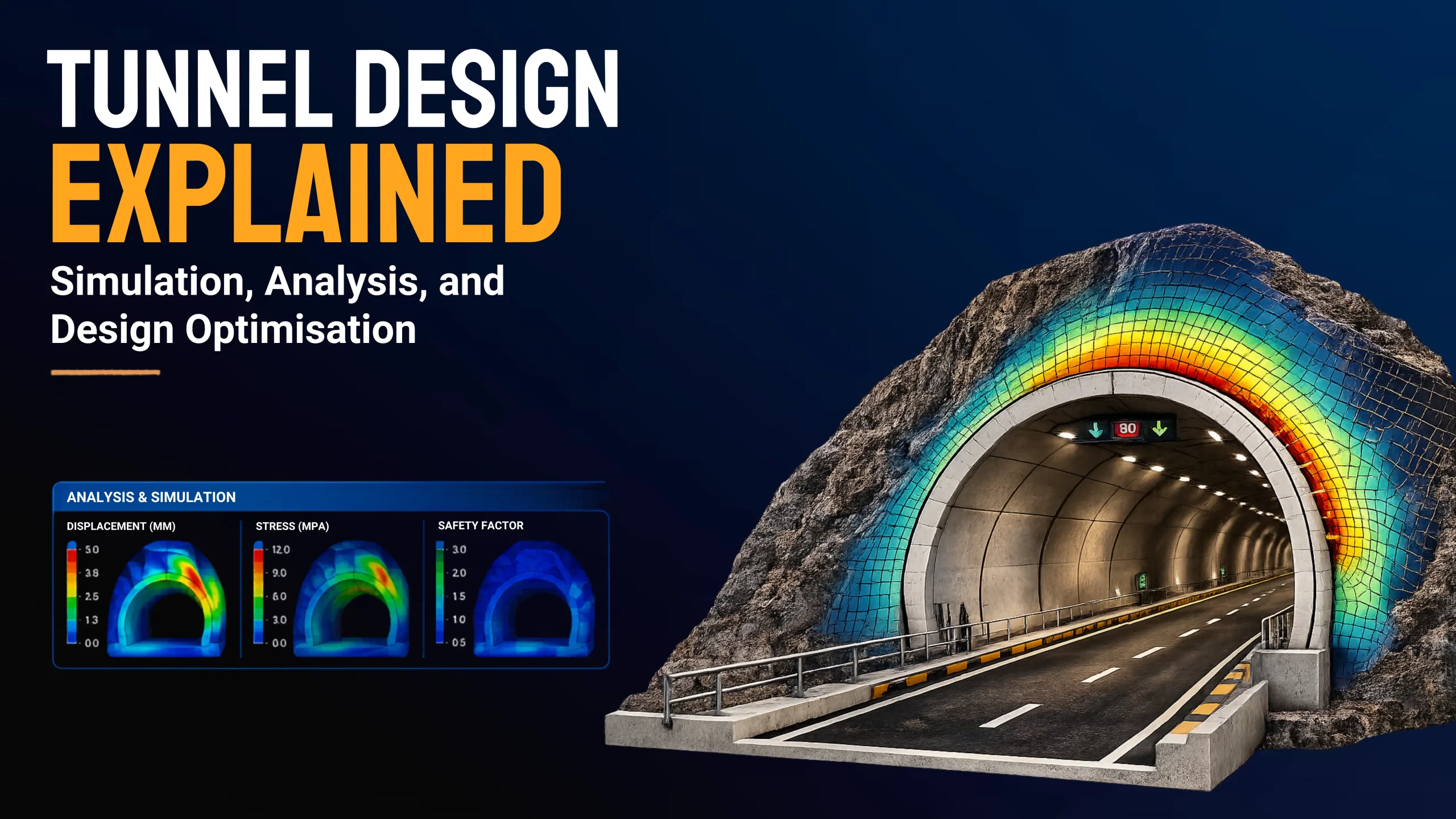
From metro networks to busy cities to utility corridors and hidden underground infrastructure everywhere, there are successful tunnels backed by smart tunnel design. Tunnel design is not just about making a passage or a way below the surface, but it is about building a reliable structure that can safely manage underground pressure, traffic loads, and long-term environmental conditions.
Today’s tunnel designs and their projects focus on advanced engineering models, software, and tools to improve structure and performance. This blog help you introduce to some of the tunnel design explaining, optimising techniques, and the overall process of tunnel design in the most practical way and clear way possible.
What Is Tunnel Design?
Tunnel design is an effective way or a structured process of planning an underground tunnel that is safe, stable, and functional. Tunnel designing involves studying the tunnel route, shape, dimensions, support systems, and construction methods, and how different methods can have an impact on tunnel designs.
Step-by-Step Process for the Tunnel Design
To develop an effective tunnel design, a systematic design process is used, using engineering, geological, and modern simulation tools to construct the overall design.
Site Investigation & Data Collection
Site investigation is the first step of tunnel design; it determines the type of ground that will support the project area. Engineers collect accurate site data using different site investigation techniques such as soil sampling, rock testing, depth boreholes for drilling wells, groundwater studies, etc.
The data gathered from this step will provide engineers with information to mitigate risks associated with development through the identification of ground conditions that create a potential for development. Examples include: weak or unstable ground conditions, fault zones, or elevated groundwater levels.
Feasibility & Preliminary Planning
Following the completion of the site investigations, understanding is obtained as to whether or not the project can be developed within the site constraints of government regulations, and the feasibility of both technical and economic factors to design and construct the tunnel.
Structural Analysis and Design
Once planning is complete, engineers begin with the phase of developing a structural design for a tunnel. The design of the tunnel involves analysis of the shape, size, thickness, reinforcement, and the type of support system.
A detailed and thorough analysis of the loads that may be applied to the tunnel (from soil, soil pressure, groundwater, and other external forces) will be done to ensure that the final design of the tunnel will be safe and durable under all proven conditions.
Testing/Sampling
Except for small projects, most stage projects use advanced software to simulate the design of a tunnel prior to any construction occurring.
Construction/Monitoring
Once the design is approved, the construction of the tunnel using TBM, NATM, cut and cover, or drill and blast will begin according to site conditions. After which, the construction process will be continuously monitored to assess settlement, ground movement, water pressure, and the stability of the tunnel.
What Is Tunnel Simulation?
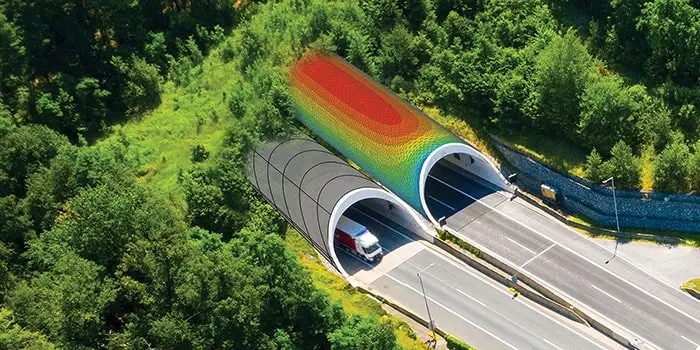
Tunnel simulation is the step where engineers make use of digital models to predict how a tunnel will behave under real-world conditions.
FEM-Based Tunnel Simulation
The Finite Element Method is one of the most widely used techniques in tunnel simulation. It breaks down the tunnel and the surrounding ground into smaller parts to study how each part will behave in different conditions.
FEM-based simulation plays an important role in tunnel design and structural design, where engineers can
- Predict ground deformation and settlement
- Analyse stress distribution in tunnel linings
- Study soil–structure interaction
- Evaluate performance under extreme conditions like earthquakes or flooding
Benefits of Simulation in Tunnel Design
- Helps to identify any potential failure zones and structural risks before construction
- Helps in optimising the tunnel structure design based on real ground conditions
- It assists in reducing unexpected delays during construction
- Allows engineers to test multiple scenarios and choose the safest approach
- Enhances long-term durability and functionality of tunnels
Read More: Tunnel Engineering: Definition, Geology, and How Tunnels are constructed.
Tunnel Design Optimisation
Design optimisation is an engineering design methodology using a mathematical formulation of a design problem to support the selection of the optimal design among many alternatives. Design optimisation involves the following stages:
When you refine designs to achieve the perfect balance between the safety, performance, and cost is called the tunnel design optimisation.
Key Optimisation Parameters
Below are some of the optimisation parameters that are used in tunnel design. These parameters directly influence the stability, durability, and efficiency of the tunnel:
- Soil type, rock strength, and groundwater levels
- Understanding tunnel geometry, such as shape, size, and alignment of the tunnel
- Knowing about the support systems while studying the type and thickness of linings, rock bolts, and reinforcements
- External pressures, traffic loads, and environmental forces
By carefully analysing these parameters, engineers can develop a more efficient and reliable tunnel structure design.
What are Tunnel Construction Methods and their Design Impact?
The choice of method affects the excavation approach, support systems, and, especially, the design of the tunnel lining, which must respond to ground pressure, water conditions, and the construction sequence.
- TBM (Tunnel Boring Machine): It actually needs a precast segmental lining that can handle immediate loads during excavation
- Drill and Blast: It requires flexible support systems like rock bolts and shotcrete due to variable rock conditions
- NATM (New Austrian Tunnelling Method): Mainly relies on the natural strength of the ground, making real-time monitoring essential for adaptive tunnel structure design
- Cut and Cover: Has a rigid structural design similar to above-ground construction, but with added soil pressure considerations
What software is used for Tunnel Design and Simulation?
Some of the software used for tunnel design and simulation are,
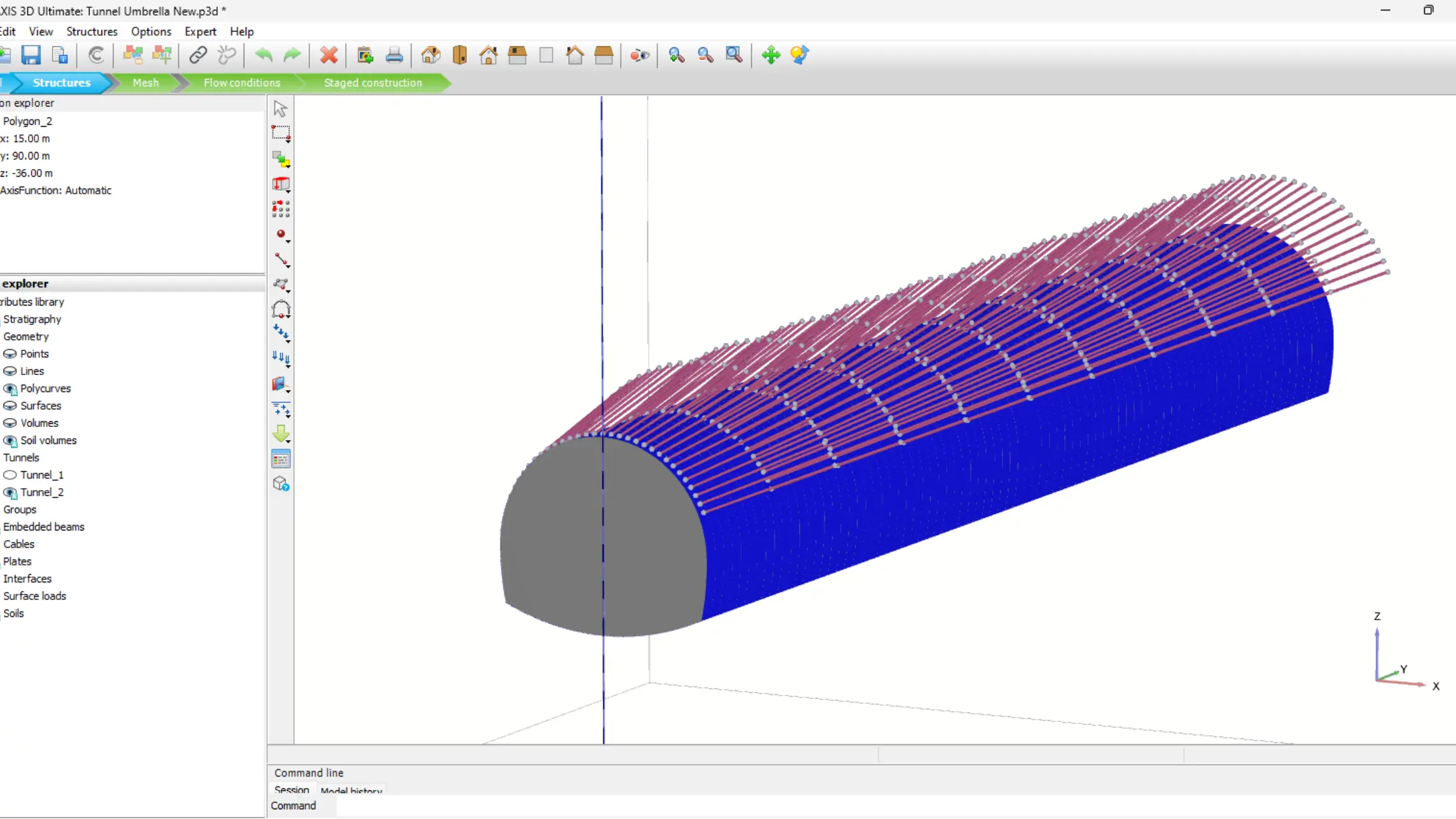
- PLAXIS 2D and 3D are two of the most widely used tools for geotechnical analysis by modelling soil deformation, groundwater impacts, and stability during tunnel excavation.
- Rocscience software is primarily used for rock mechanics and underground excavation analysis, enabling engineers to evaluate rock stability, support systems, and tunnel safety in complex geological conditions.
- OpenTunnel is used for tunnel design and construction workflow management, enabling engineers to handle alignment design, excavation sequencing, and integrated tunnel project modelling efficiently.
Read More: https://pigsolearning.com/blog/plaxis-vs-rocscience/
These tools help engineers analyse soil and rock behaviour, tunnel stability, excavation stages, groundwater impact, and support system performance in real-world tunnel projects.
These software tools are integral to the success of tunnel design today, as they allow engineers to test various operating conditions, optimise designs, and ensure safe and efficient operation throughout the construction process.
Conclusion
As we come to the end of the blog, we elucidate the importance of tunnel design and how it serves as the backbone of safe and efficient underground construction. So, are you looking to enhance your skills in tunnel designing? Or do you want to explore real-world case studies and practical applications?
At PIGSO LEARNING, you can take the next step with our Tunnel Design and Analysis Course Online, where you’ll gain in-depth knowledge of design principles, simulation techniques, and industry-relevant tools, guided by expert educators who simplify complex engineering concepts.
FAQs
Q1. What is tunnel design?
Tunnel design is an effective way of planning an underground tunnel that is safe, stable, and functional. Tunnel designing involves studying the tunnel route, shape, dimensions, support systems, and construction methods, and how different methods can have an impact on tunnel designs.
Q2. What is structural analysis in tunnelling?
Evaluation of how a tunnel will respond to loads of soil pressure, rock stress, traffic forces, etc., is what structural analysis in tunnelling is.
Q3. What is design optimisation in tunnelling?
When engineers tend to improve a tunnel design to achieve a clear balance between safety, performance, and cost, this process is called design optimisation. It assists engineers in choosing the correct materials with a proper support system and developing layouts without overdesigning the structures.
Q4. What software is used for tunnel design?
Common software such as Rocscience, PLAXIS 2D/3D, and OpenTunnel is mainly used in tunnel design.
Q5. Where can I learn a tunnel design course?
If you want to build expertise in tunnel design, structural analysis, simulation, and modern engineering tools, you can learn a professional tunnel design course from PIGSO LEARNING. They have extensive industry-focused programs that are designed to provide practical knowledge, software training, and real-world engineering skills for students and professionals.

Simran Shekhawat is an experienced SEO content writer with three years of hands-on experience in crafting high-impact digital content. With a strong command of search engine optimisation practices, she specialises in creating content that not only reads well but also ranks effectively. Her expertise encompasses keyword research, topic clustering, on-page SEO, content strategy, and crafting copy that aligns with both user intent and brand objectives.