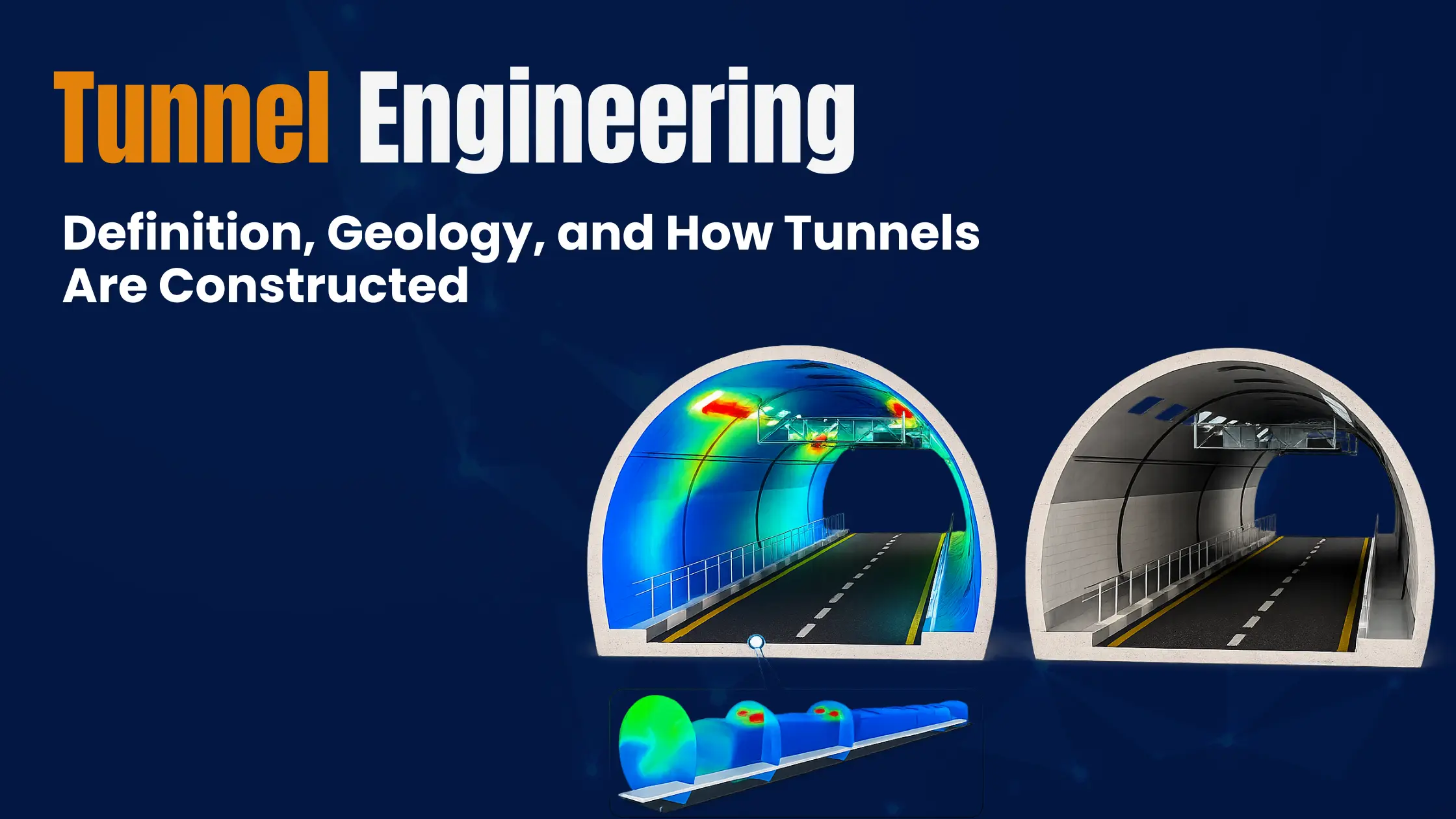
- What is Tunnel Engineering and why is it important?
- What is Tunnel Engineering Geology, and its importance?
- Common Tunnel Construction Methods
- How Tunnels Are Designed and Simulated Using Engineering Software
- How Is a Tunnel Constructed? (Step-by-Step Process)
- Applications of Tunnel Engineering
- Conclusion
- FAQs
Tunnel engineering makes modern infrastructure easy and sustainable. To understand what tunnel engineering is, you need to read the steps and what software is involved in the process of constructing a tunnel.
Along with how geology in tunnel engineering is designed to help engineers and how its applications influence construction decisions. In this blog, we will explore the fundamentals of tunnel engineering while using modern engineering techniques and tools.
What is Tunnel Engineering and why is it important?
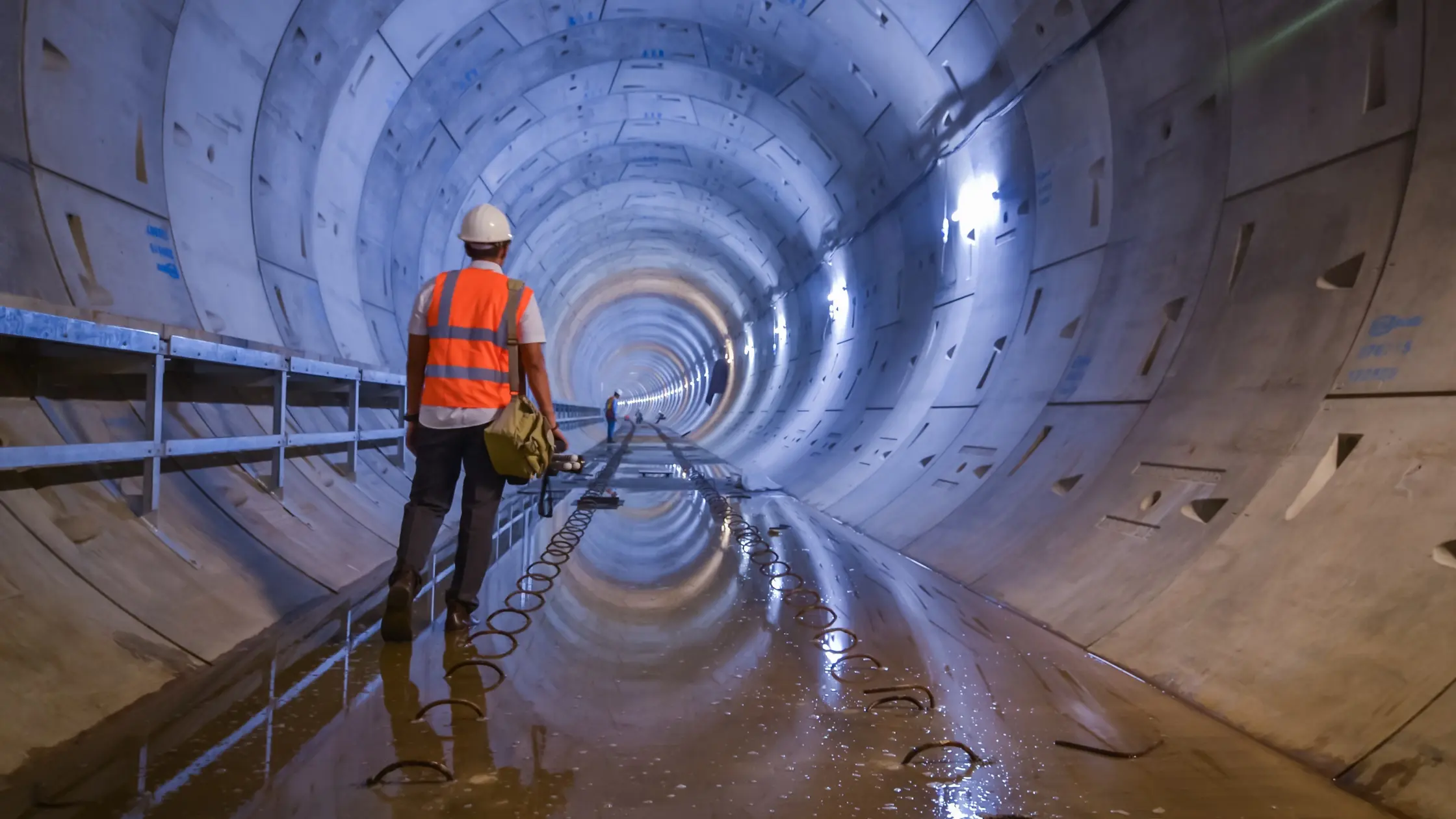
Underground construction and Tunnel engineering are interdisciplinary concepts that require knowledge and skills from various fields, including civil engineering, geological engineering, and others.
Tunnel engineering is important as it makes the process of infrastructure easy and possible without disturbing anything on the surface too much.
What is Tunnel Engineering Geology, and its importance?
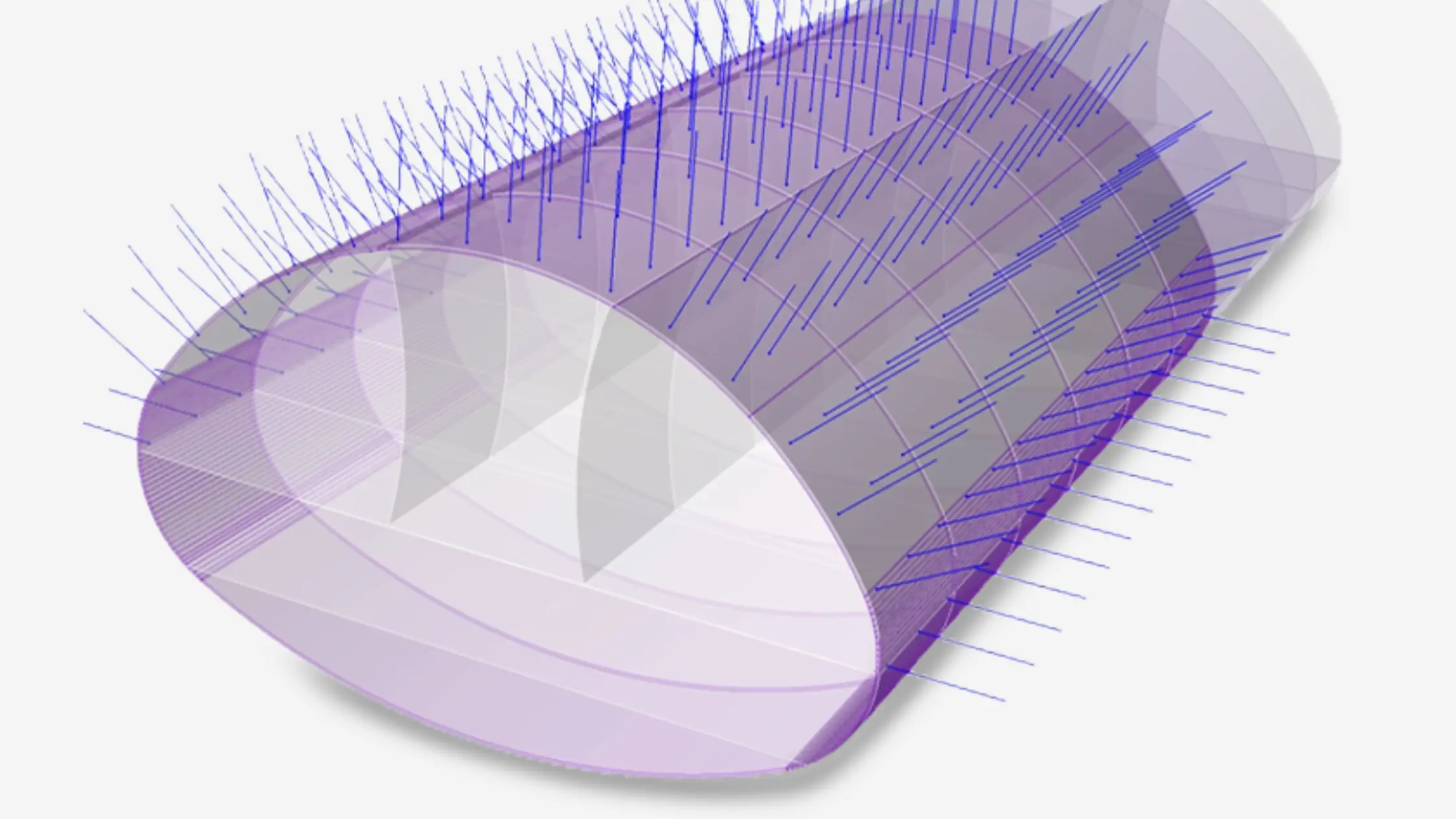
Tunnel engineering geology is one of the most crucial aspects of underground construction, as it primarily focuses on understanding the ground conditions in which the tunnel is planned.
Tunnel engineering geology refers to a detailed investigation of subsurface conditions, both before and after tunnel construction. It analyses rock strength, soil behaviour, fault lines, and water presence. As it may help in,
- Understanding how a strong foundation of geology can help in
- Can help manage groundwater and drainage
- Prevent any sort of delays and cost overruns
It mainly plays a pivotal role in determining how a tunnel is constructed with different soil and rock conditions.
Common Tunnel Construction Methods
- Cut and Cover Method: Is a shallow method where a trench is excavated, and the tunnel is built and covered with soil
- Tunnel Boring Machine (TBM): It mainly uses a mechanical machine to excavate tunnels with high precision.
- Drill and Blast Method: Mainly works by drilling holes into rock and using explosives to break it apart.
- New Austrian Tunnelling Method (NATM): Mainly relies on the natural strength of the surrounding rock, with flexible support systems like shotcrete and rock bolts.
How Tunnels Are Designed and Simulated Using Engineering Software
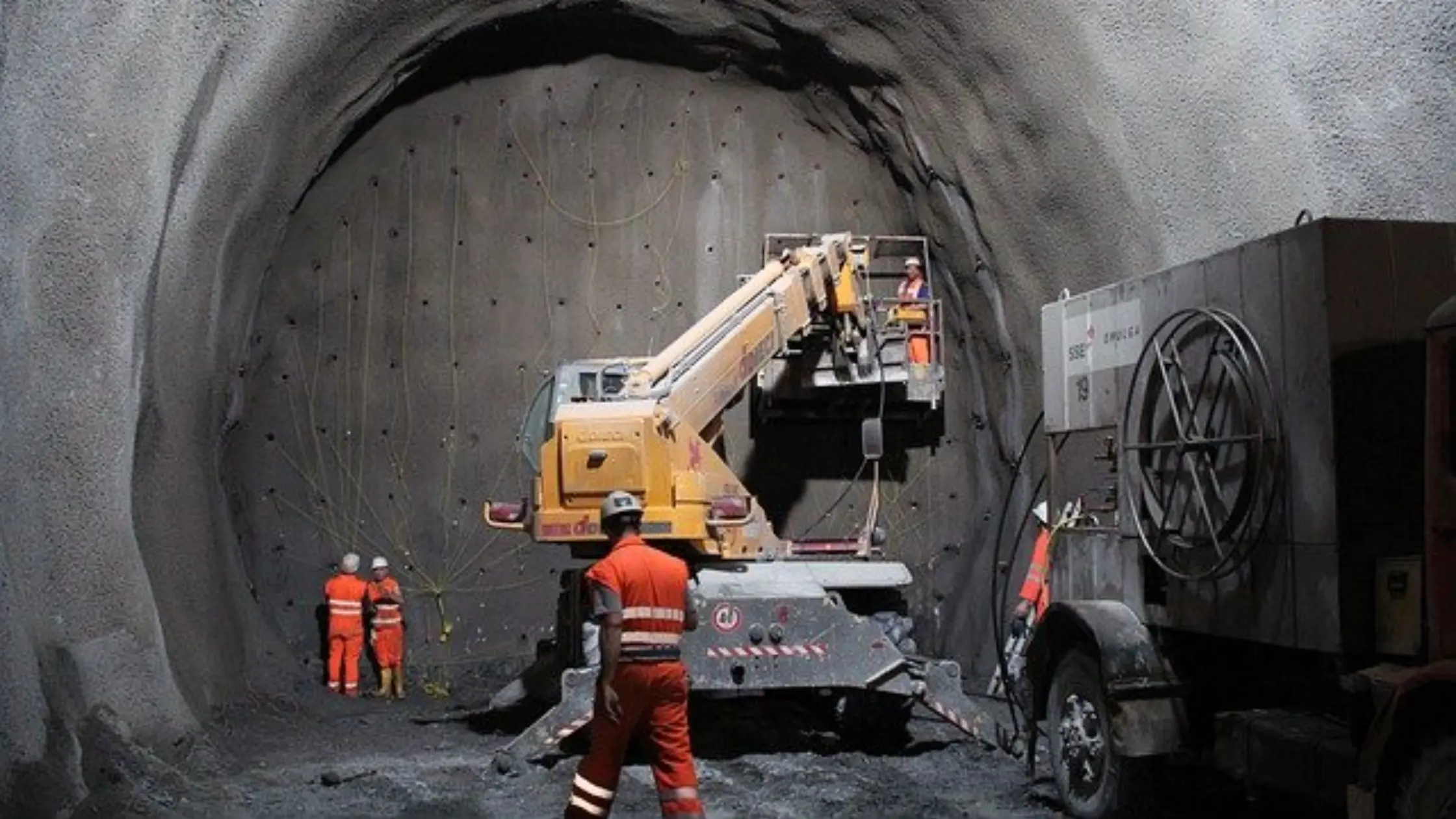
Role of Simulation in Tunnel Engineering
Simulation plays an important role in predicting how the ground and tunnel structure will behave before actual construction begins. In this stage, this is where tunnel engineering geology becomes even more important, so by combining geological data with simulation tools, engineers can test different scenarios, choose the safest construction method, and plan support systems more effectively.
PLAXIS 2D/3D –
PLAXIS 2D and 3D are used for Tunnel Design analysis. They assist in simulating soil and rock behaviour under different loading and excavation conditions.
PLAXIS is used to:
- Analyse ground deformation during excavation
- Study the impact of groundwater pressure
- Design support systems like retaining structures and linings
To gain hands-on experience in geotechnical simulation, explore our PLAXIS Training Course Online. Learn how to apply these concepts in real tunnel and soil analysis projects.
Rocscience – RS2 & RS3
In modern tunnel engineering, Rocscience software is a specialised geotechnical software that plays a critical role in analysing ground behaviour and designing safe underground structures.
Tools like Rocscience, such as RS2 and RS3, are widely used for tunnel design and analysis.
RS2 is a 2D finite element analysis software that helps engineers evaluate stress distribution, deformation, and support requirements in tunnels.
It is mainly used for managing and analysing cross-sectional behaviour and understanding how geological conditions impact tunnel stability. RS3, on the other hand, is a 3D analysis tool that provides a more comprehensive view of complex tunnel geometries. It allows engineers to simulate real-world conditions more accurately, including interactions between different geological layers and support systems.
How Is a Tunnel Constructed? (Step-by-Step Process)
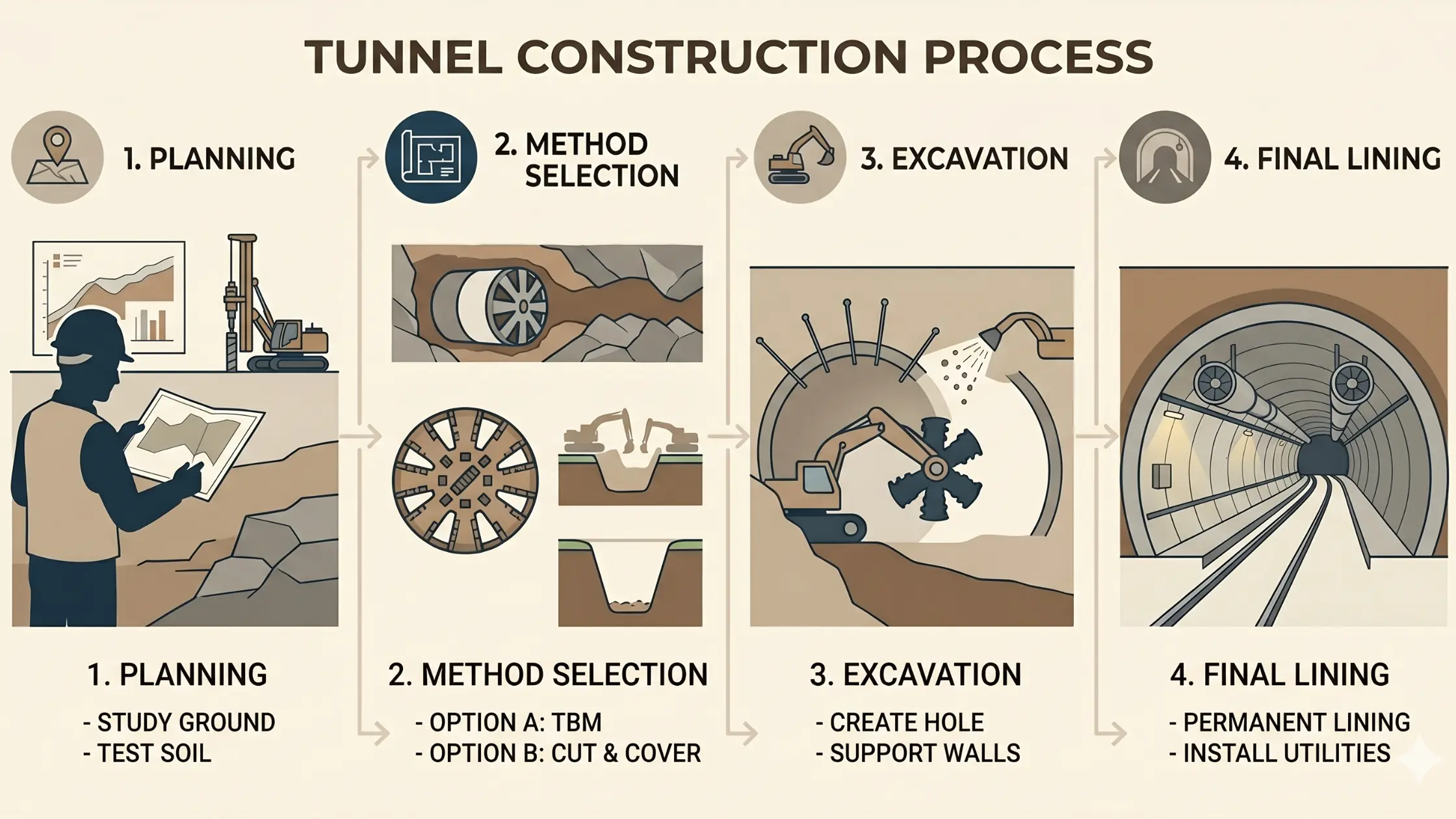
Learning about how a tunnel is constructed allows us to give a clear picture of how engineers can now transform complex underground spaces into a great infrastructural function. The step how to constructing a tunnel are systematic.
Planning and Site Investigation
This is the most important stage where engineers learn about the project’s progress and purposes, along with understanding soil testing and groundwater analysis. Planning and site investigation are the first and most crucial steps in tunnel construction.
Design and Method Selection
Once the data is gathered, engineers move towards designing the tunnel. Based on the geological conditions and project requirements, practices like Tunnel Boring Machiners or cut – and – cover or drill-and-blast can be used.
Excavation and Ground Support
This is one of the most important phases where the actual construction starts to begin. Under this excavation process, ground support systems are installed to maintain stability, and they may include rock bolts, shotcrete, or any temporary support.
Applications of Tunnel Engineering
Transportation Tunnels (Road, Rail, Metro)
In transportation tunnel engineering is widely used during the time of construction of roadways, railway lines, metro systems, etc., and this is usually contrustucted at the densely populated urban areas.
So by constructing tunnels underground, engineers work to reduce the traffic congestion, assist in preserving landscapes, and help create faster transit routes. This process of how a tunnel is constructed is done with detailed planning, geological assessments, and with the use of advanced tools like Tunnel Boring Machines or drill or blast techniques.
Utility and Underground Infrastructure
In many urban areas, the city usually relies on utility tunnes to service for essential services like electricity cables, gas pipelines, telecommunications, or drainage systems.
With the help of tunnel engineering, these services can be utilized efficiently while reducing clutter and improving maintenance access. These tunnels are mainly constructed with a strong emphasis on durability, ventilation, and easy repair.
Water Supply Turned Sewer Tunnels
These tunnels were primarily built to manage the constant pressure of water, be corrosion-resistant, and perform under diverse geological settings. Utility and underground infrastructure. In many cities, the city typically makes use of utility tunnels to provide basic services such as electricity cables, gas pipelines, telecommunications, or drainage systems.
This helps in utilising the services in a more efficient manner, clearing up spaces and making maintenance easier with the help of tunnel engineering. This type of tunnelling is primarily built for sturdy, air-perfused, and quick facility areas.
Conclusion
Tunnel engineering is one of the most important concepts in modern infrastructure, which helps ensure a safe and efficient underground construction process.
With the growing use of advanced geotechnical tools like PLAXIS 2D/3D and RS2/3 – Rocscience, tunnel engineering is becoming more accurate, safer, and future-ready. These software solutions help engineers to analyse ground behaviour, predict deformation, and design efficient tunnel support systems under complex geological conditions.
If you’re looking to build your career or gain some expertise in the tunnel engineering subject or any advanced engineering concepts and tools, join PIGSO LEARNING, as we offer specialised modules designed to help you gain practical, industry-relevant skills in engineering and simulation.
Ready to take the next step? Join our Tunnel Design and Analysis Course Online and start working on real-world tunnel projects with expert guidance, hands-on training, and certification.
FAQs
Q1. How is a tunnel constructed?
Building a tunnel involves using a process that consists of stages such as planning and site examination, choosing the design and method, excavation, supporting the ground structure with preliminary linings/safety systems, and finally lining it.
Q2. Why is tunnel engineering geology important?
Tunnel engineering geology is important as it helps engineers to understand the soil, rock, and groundwater conditions, which directly impact tunnel design, safety, and construction methods.
Q3. What are the common methods used in tunnel construction?
Some of the common methods used in tunnel construction are Tunnel Boring Machine (TBM), cut-and-cover, drill-and-blast techniques, and the New Austrian tunnelling method, as the selection and application of these methods is entirely based upon the ground conditions, project requirements, and surrounding environmental factors.
Q4. What are the main challenges in tunnel engineering?
The major challenges that are faced at the time of tunnel construction are geological uncertainty, groundwater intrusion, structural stability, etc. Apart from these selletemtn control in urban areas, and the tunnel lining design complexity are some of the major challenges for safety and durability.
Q5. How to get trained in tunnel designing with professional certification and hands-on training
You can get trained in tunnel design by enrolling in a structured program offered by PIGSO LEARNING. Our courses are designed with theoretical and practical knowledge while providing hands-on training on various concepts of tunnel designs, excavation methods, geotechnical analysis, etc. Learn from practical exposure, case studies, and professional educators. Once you complete your course, get a professional certificate to improve your skills.

Simran Shekhawat is an experienced SEO content writer with three years of hands-on experience in crafting high-impact digital content. With a strong command of search engine optimisation practices, she specialises in creating content that not only reads well but also ranks effectively. Her expertise encompasses keyword research, topic clustering, on-page SEO, content strategy, and crafting copy that aligns with both user intent and brand objectives.