- What Is 3DEXPERIENCE?
- Products Included in 3DEXPERIENCE
- How Does 3DEXPERIENCE Combine CAD and PLM?
- How Does 3DEXPERIENCE Compare to Traditional Tools?
- Benefits of Using 3DEXPERIENCE Platform
- Challenges Companies Face When Shifting to the 3DEXPERIENCE Platform
- Who Should Learn 3DEXPERIENCE? (Industries + Professionals)
- Conclusion
What Is 3DEXPERIENCE?
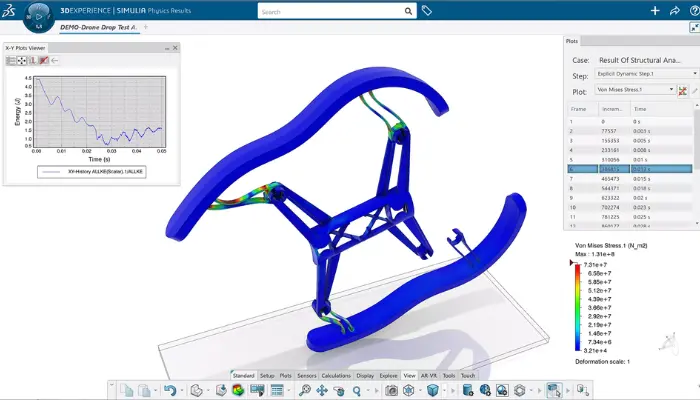
3DEXPERIENCE is a cloud-based platform from Dassault Systèmes that connects CAD, simulation, data management, collaboration, and product life-cycle management (PLM) in a single environment.
Products Included in 3DEXPERIENCE
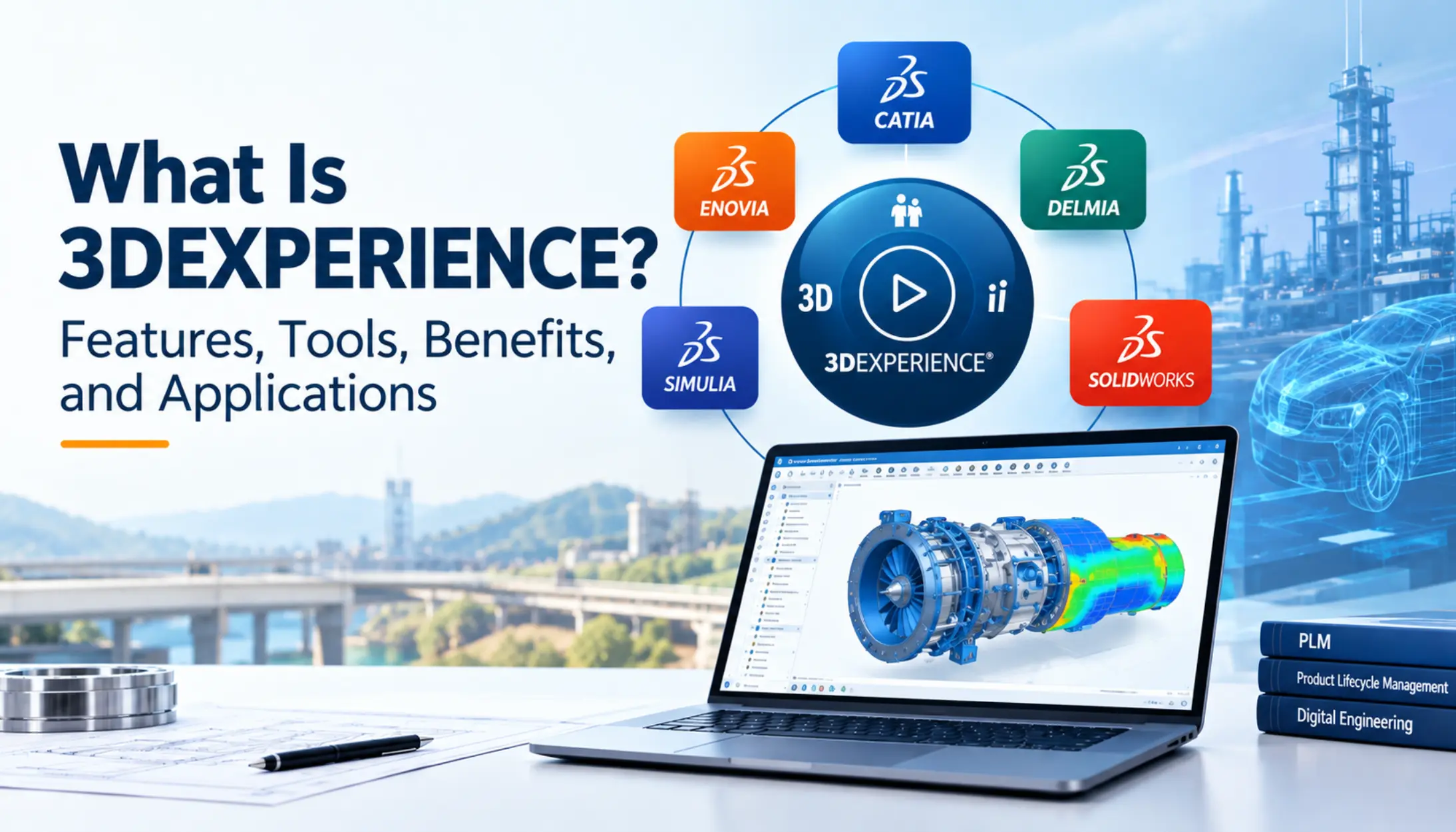
The 3DEXPERIENCE platform brings together several Dassault Systèmes solutions that support different stages of product development. These solutions can be grouped into CAD tools for efficient product designs and PLM tools for managing product data and manufacturing activities.
What Are 3DEXPERIENCE Tools?
CAD forms the design layer of 3DEXPERIENCE where you can create, develop, and refine 3D models
CATIA
CATIA is a powerful 3D CAD software mainly used for product design, engineering, modelling, and surface development. It is a platform-based version of CATIA that integrates 3D design, engineering, collaboration, and product data management within the 3DEXPERIENCE environment.
SOLIDWORKS
SOLIDWORKS: A widely used 3D CAD software for product design, 3D modelling, assemblies, drafting, simulation, and product development. SOLIDWORKS 3DEXPERIENCE is a cloud-connected version of SOLIDWORKS integrated with the 3DEXPERIENCE platform. It provides 3D design along with data management, product life-cycle management, and cloud-based product development.
ENOVIA
ENOVIA: It is a product life-cycle management software developed by Dassault Systèmes. As a PLM software, it helps organisations to manage the overall life-cycle of a product from concept through manufacturing. Service and retirement. Enovia PLM software works as a centralized digital hub that connects engineering, manufacturing, supply chains, and business teams. It securely handles CAD data from design tools like SOLIDWORKS and CATIA with proper revision and control
PLM Tools
PLM tools, or product life-cycle management tools,are software solutions that are used to manage a product’s information, processes, and data throughout its life-cycle. Here, you can connect activities ranging from product design and engineering to manufacturing ,service, and product retirement. PLM tools are designed to help organizations manage product specifications and engineering data. CAD files and their related documents
DELMIA
DELMIA: DELMIA is also a digital manufacturing supply chain software developed by Dassault Systèmes. The full form of DELMIA is Digital Enterprise Lean Manufacturing Interactive Application.Its application is designed to bridge the gap between virtual design and real-world industrial operations. It helps companies to use digital twins, which are virtual replicas of a physical process.
SIMULIA
SIMULIA: SIMULIA is an advanced simulation software portfolio developed by Dassault Systèmes. SIMULIA helps engineers to test and analyse how products mainly perform in the real world before building their physical prototypes. It is widely used for structural analysis, nonlinear analysis, thermal analysis, dynamics, contact problems, and coupled multiphysics simulations.
How Does 3DEXPERIENCE Combine CAD and PLM?
3DEXPERIENCE brings CAD and PLM together on one collaborative platform. So when they are combined,it helps teams to design, manage product data, and track revisions. The combination or integration will connect engineering designs with the product development and PLM process, reducing data workflow and improving efficiency.
How Does 3DEXPERIENCE Compare to Traditional Tools?
Compared with traditional CAD tools, 3DEXPERIENCE helps connect designs with engineering product data. This assists the team in gaining real-time information, improving collaboration, and managing the product life-cycle
3DEXPERIENCE vs Traditional CAD Software
Traditional CAD software is confined to creating and modifying 2D and 3D designs. On the other hand, 3DEXPERIENCE goes a step further by integrating the entire design process with the management of data, collaboration, simulation, production of the final product, and management of the solution life-cycle. Rather than switching from the traditional CAD concept with a different software solution, it can be improved for use in the cloud as well as the connected CAD process.
For example, an engineering team may use AutoCAD to create 2D drawings or SOLIDWORKS to develop 3D models. Though these tools are powerful for design, organisations may need additional systems for product data management, simulation, collaboration, manufacturing planning, and life-cycle management.
Why Is Industry Shifting to 3DEXPERIENCE?
The industry is shifting towards 3DEXPERIENCE because there is a demand for connecting people around product data and processes. There is cloud-based access with centralised data, which enables real-time collaboration with integrated CAD and PLM workflows.
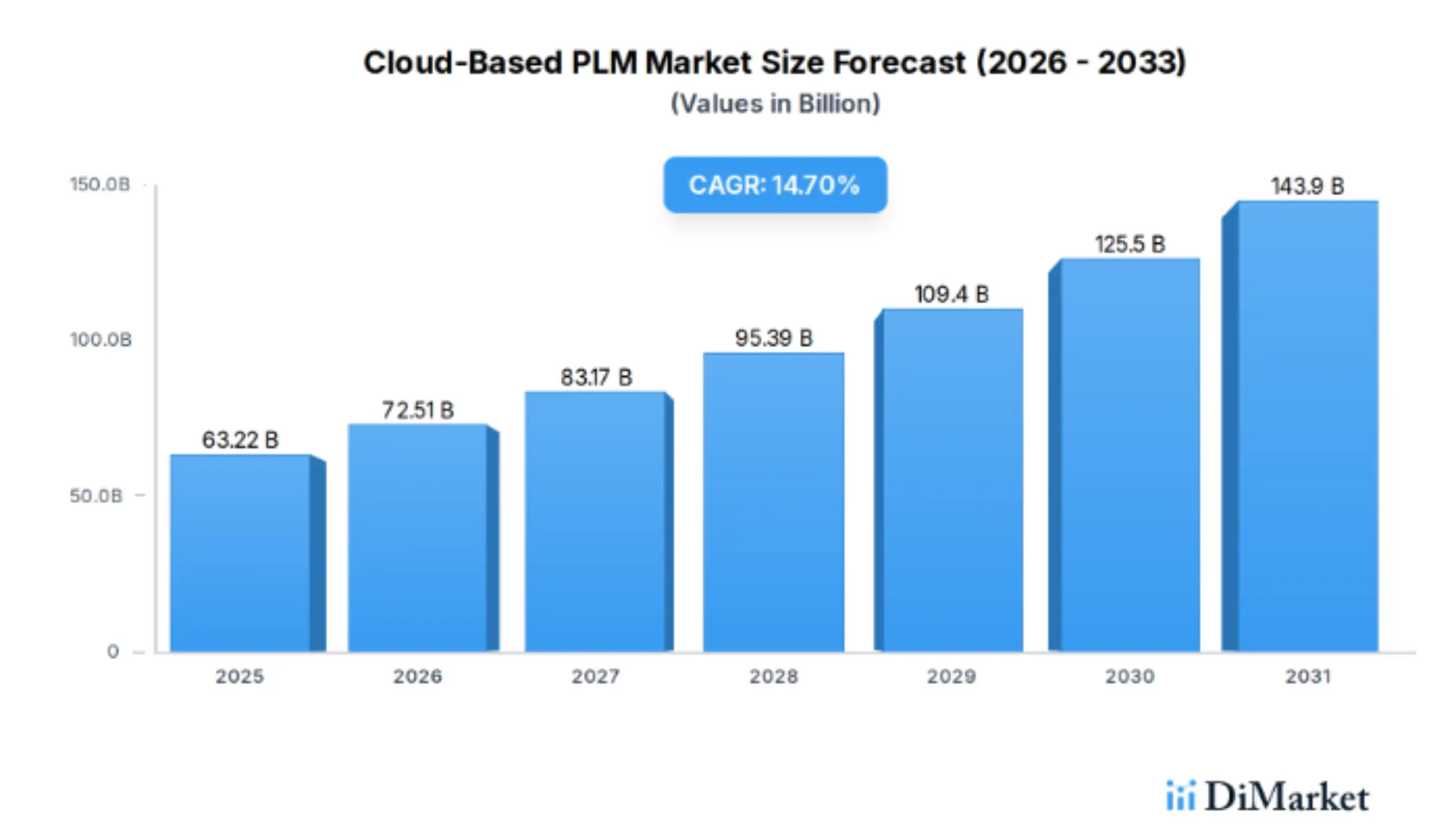
The PLM market is projected to grow from USD 36.60 billion in 2026 to USD 58.52 billion by 2031, with cloud deployment growing fastest at a 14.0% CAGR. Cloud already holds over 43% of PLM software revenue.
This trend is also reflected in Dassault Systèmes’ 2026 results, with 3DEXPERIENCE software revenue growing 7% and cloud software revenue growing 8% in Q1 2026. 3DEXPERIENCE Cloud revenue alone grew 30%. In simple terms: CAD helps teams design products, PLM tools help manage their life-cycle, and 3DEXPERIENCE connects both with collaboration, simulation, manufacturing, and data management.
Instead of using standalone tools such as AutoCAD or SOLIDWORKS for design and separate PLM systems such as Team center or Windchill for life-cycle management, organizations can use 3DEXPERIENCE to connect multiple product development functions through one platform.
Benefits of Using 3DEXPERIENCE Platform
Some of the benefits of using 3DEXPERIENCE software are as follows,
- Helps manage CAD, product data, and PLM information in one platform
- It helps connect engineering, manufacturing, and other teams in a shared environment
- Assist in improving data management while tracking revisions, changes, and product information more efficiently
- You can connect design, simulation, and manufacturing workflows for faster product development
- Support product development from design and engineering through manufacturing and beyond.
Challenges Companies Face When Shifting to the 3DEXPERIENCE Platform
3DEXPERIENCE brings CAD, PLM, simulation, and manufacturing data all under one roof. The move to 3DEXPERIENCE is a transformation project and not just a software install. Some of the challenges are.
DATA Migration
One of the first challenges which companies face is at the time of migrating existing CAD and product data to the 3D EXPERIENCE platform.
Companies may have years of parts, assemblies, drawings, product structures, documents and other engineering information stored across drives, network folders, PDM systems or different CAD applications.
The challenge here is not just about moving files from one location to another. Dassault Systèmes recommends treating migration as a separate activity from user on-boarding and planning it in advance.
Its guidance also notes that 3DEXPERIENCE should not be treated as an archive for every historical design; companies should determine which content, such as current projects and component libraries, actually needs to be migrated.
User Training and Adoption
Another challenge is helping employees to adapt to new tools, processes and ways of working. Users who have spent years working with standalone CAD software are accustomed to specific file management, revision control approval and collaboration process.
The learning curve can also vary between roles. Dassault Systèmes recommends role-specific and process-specific training rather than relying only on generic product training.
Companies may also face resistance when employees do not understand why existing processes are being changed. Dassault Systèmes identifies organizational change and user adoption as important factors in successful 3DEXPERIENCE implementation.
Implementation and Total Cost
Cost is another important consideration when adopting 3DEXPERIENCE. Dassault Systèmes’ implementation guidance states that even basic data-management implementations can involve configuration decisions, workshops, and individualized support, while more complex implementations can require additional resources and services. Please note the cost varies depending upon the
Poor planning can also increase the overall implementation cost. Unexpected customization requirements, additional software or hardware needs, training expenses, and project delays can contribute to budget overruns.
Integration with Existing System
For companies, adopting 3DEXPERIENCE does not mean replacing every existing business system. Engineering data may still need to flow between CAD, ERP, MES, CRM, PDM, manufacturing, procurement, and other enterprise applications.
This makes integration an important consideration during implementation. For example, engineering information such as product structures, bills of materials, revisions, and released data may need to be transferred between 3DEXPERIENCE and an ERP system used for procurement or manufacturing. Existing legacy systems may also use different data structures, formats, workflows, and identifiers.
Dassault Systèmes describes 3DEXPERIENCE as an open platform with APIs, web services, and integration capabilities for connecting with external PDM, CAD, ERP, and other enterprise systems. However, connecting these systems still requires organizations to define the required data flows, integration architecture, security, and ownership of information.
Who Should Learn 3DEXPERIENCE? (Industries + Professionals)
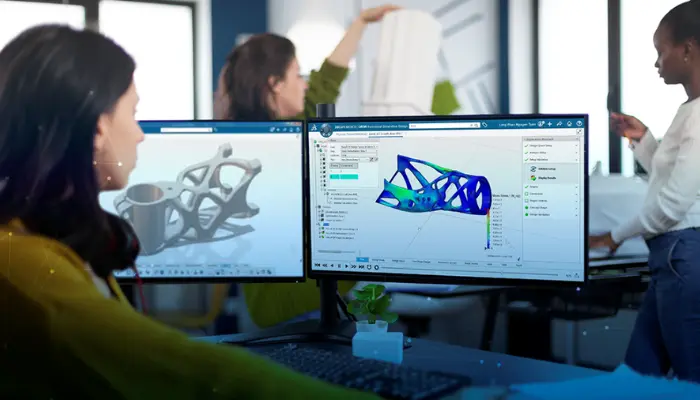
3DEXPERIENCE is mainly useful for professionals who work on product design, engineering, manufacturing, or product data. It is especially relevant in industries such as:
- Automotive
- Aerospace
- Manufacturing
- Product Design
- Mechanical Engineering
- Industrial Equipment
- Consumer Products
Professionals who can benefit from learning it include:
- CAD Designers
- Mechanical Engineers
- Product Engineers
- Design Engineers
- PLM Professionals
- Manufacturing Engineers
Professionals looking to upgrade past their current CAD-based workflows might find that learning 3DEXPERIENCE is beneficial in obtaining knowledge of the fundamentals of how design, data, and product life-cycle processes work together.
PIGSO Learning helps engineering students and professionals build practical knowledge of 3DEXPERIENCE and industry-relevant engineering software through structured, application-focused training.
With courses designed to strengthen both software skills and engineering fundamentals, learners can develop the capabilities needed to work with modern digital engineering and product development workflows.
Conclusion
3DEXPERIENCE differs from traditional CAD in that it combines CAD, PLM, collaboration, simulation, and product life-cycle management in a single unique platform. The learning of this tool will help engineering professionals gain abilities essential in today’s digital world.
PIGSO LEARNING offers industry-focused engineering training designed to help students and professionals build practical skills in 3DEXPERIENCE and other engineering software. Through structured courses and application-oriented learning, learners can strengthen their understanding of digital engineering workflows and prepare for the evolving demands of the engineering industry.
FAQs
Is 3DEXPERIENCE a CAD software?
3DEXPERIENCE offers CAD capabilities, but it is much more than a standalone CAD software. It is a connected platform that brings together CAD design, PLM, simulation, collaboration, manufacturing, and product data management, enabling teams to manage different stages of product development within a unified environment.
Who uses 3DEXPERIENCE software?
3DEXPERIENCE software is used by professionals and organizations in industries such as automotive, aerospace, manufacturing, industrial equipment, and product design. Common users include CAD designers, mechanical engineers, product engineers, PLM professionals, and manufacturing engineers.
What is the difference between CATIA and 3DEXPERIENCE?
CATIA is a CAD and engineering solution used for 3D design, modelling, engineering, and product development. 3DEXPERIENCE is a broader platform that can connect CATIA with product life-cycle management, collaboration, simulation, manufacturing, and product data management capabilities. In simple terms, CATIA focuses primarily on designing and engineering products, while 3DEXPERIENCE provides the connected environment in which these activities can be managed and collaborated on.
How does CATIA work with 3DEXPERIENCE?
CATIA runs as part of the 3DEXPERIENCE ecosystem, allowing teams to use its design and engineering capabilities alongside simulation, collaboration, data management, and virtual twin capabilities. This helps teams manage product development in a connected environment.
Who can benefit from using 3DEXPERIENCE?
3DEXPERIENCE can be used by organizations of different sizes and by teams involved in engineering, design, manufacturing, project management, and product development. Its role-based approach allows users to access capabilities relevant to their responsibilities.

Simran Shekhawat is an experienced SEO content writer with three years of hands-on experience in crafting high-impact digital content. With a strong command of search engine optimisation practices, she specialises in creating content that not only reads well but also ranks effectively. Her expertise encompasses keyword research, topic clustering, on-page SEO, content strategy, and crafting copy that aligns with both user intent and brand objectives.
Comments are closed