
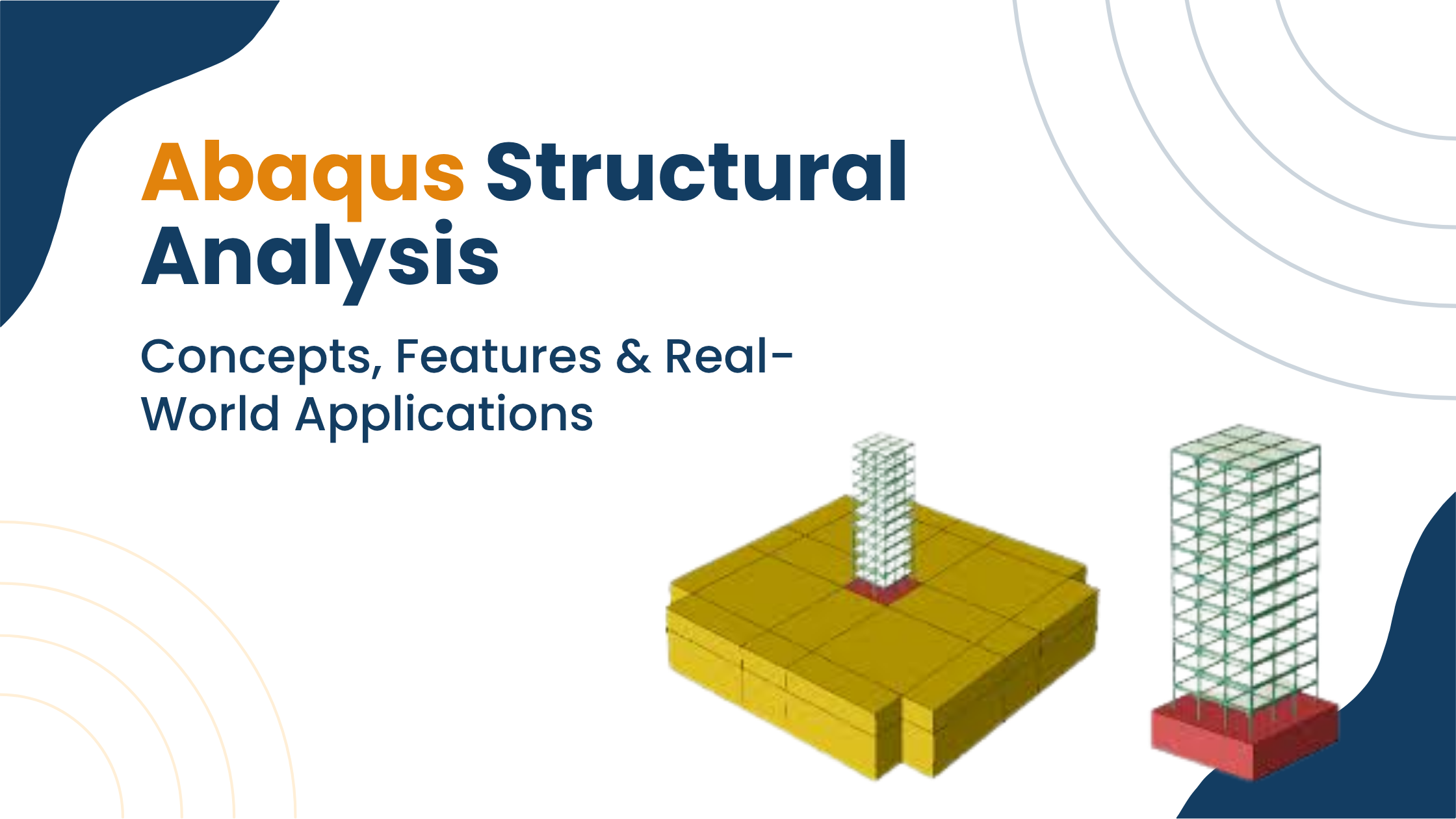
Abaqus is a leading finite element analysis (FEA) software, mainly popularised for assisting in handling complex, nonlinear structural engineering problems. It simulates material nonlinearity and contact interactions, and studies tensions and large deformations, making it a powerful tool for analysing structural stability, buckling, and failure scenarios.
In this blog, we will explore the fundamentals of ABAQUS structural analysis, its key features, why engineers rely on it today, and the different types of structural analyses it supports. If you are looking for Abaqus structural engineering tutorials, this guide will help you build a strong foundation.
Simulia Abaqus Software
Abaqus is the most powerful finite element analysis (FEA) software, which is used for managing and simulating complex structural, mechanical, and Multiphysics problems.
It helps engineers to analyse the real-world behavior, including nonlinear materials and dynamic interactions. It was originally developed by Hibbitt, Karlsson & Sorensen and is now owned and managed by Dassault Systèmes under its SIMULIA platform.
Abaqus integrates seamlessly with other advanced engineering tools, offering a robust environment for simulation-driven design. Its capabilities extend across industries such as aerospace, automotive, civil engineering, and biomedical fields, making it a critical tool for solving real-world engineering challenges.
Key Features of Abaqus
Nonlinear analysis capabilities
Nonlinear analysis capabilities are one of the most intriguing and standout features of Abaqus structural analysis. Compared with basic simulation tools, Abaqus can study the model material nonlinearity, geometric changes, and complex contact interactions with ease. This nonlinear analysis capability of Abasus makes it compelling for analysing real-world engineering scenarios.
Advanced Material Modelling (Metals, Concrete, Composites)
Abaqus structural analysis helps in identifying accurate simulations of metals with elastic-plastic behaviours, studying the composites of anisotropic materials, and helps study the advanced models like Abaqus CDP.
Features to have a blend of seamless Integration with CAD Tools
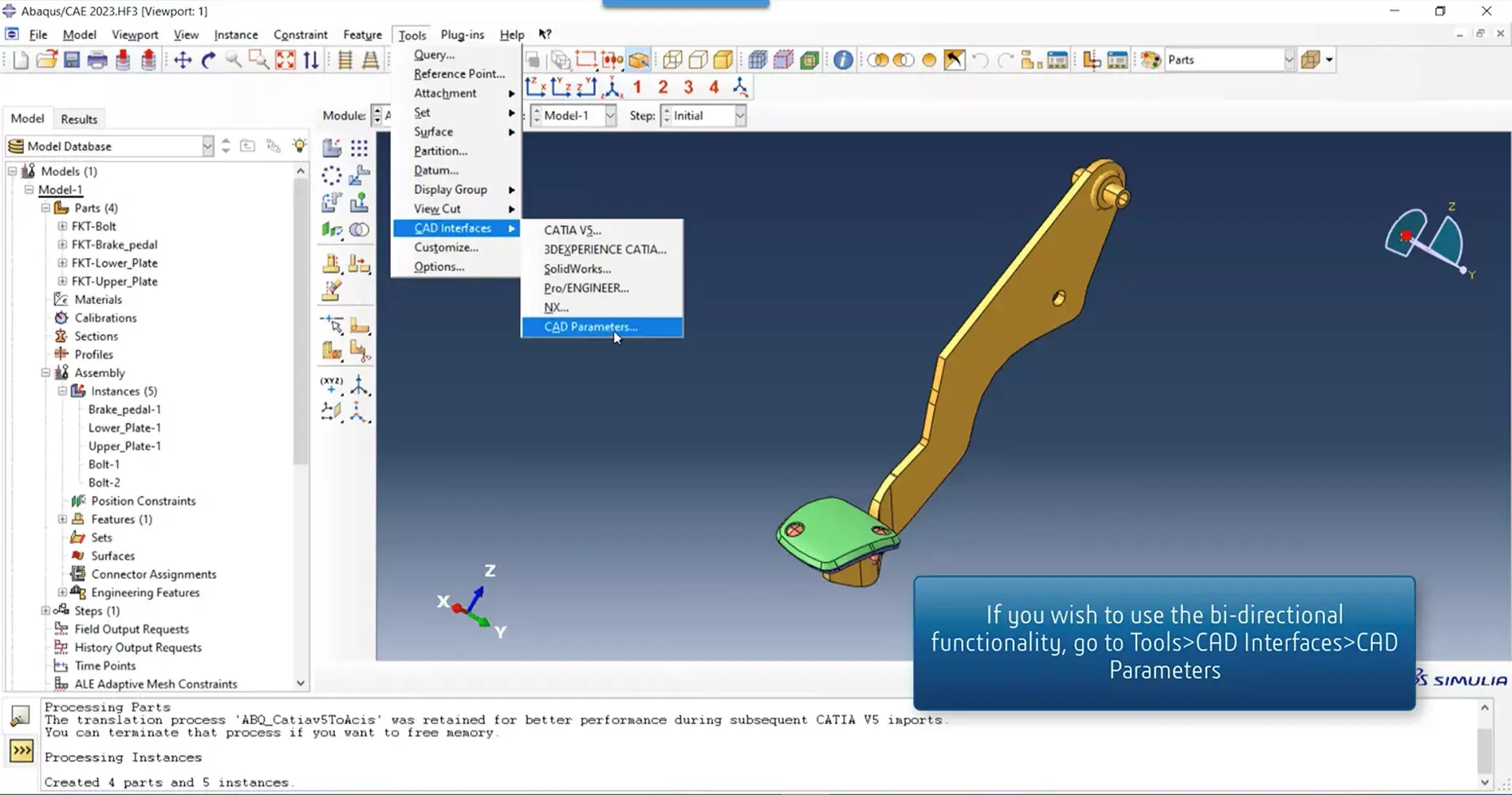
Abaqus structural analyses aim to integrate a smooth feature with CAD software, which allows engineers to import complex geometries directly into the simulation environment. This reduces manual effort, minimises errors, and speeds up the modelling process. As a result, ABAQUS structural analysis becomes more efficient, enabling faster design iterations and more reliable validation before real-world implementation. As a result, ABAQUS structural analysis becomes more efficient and reliable.
Why Engineers Use Abaqus for Structural Analysis
To construct highly accurate designs and solutions
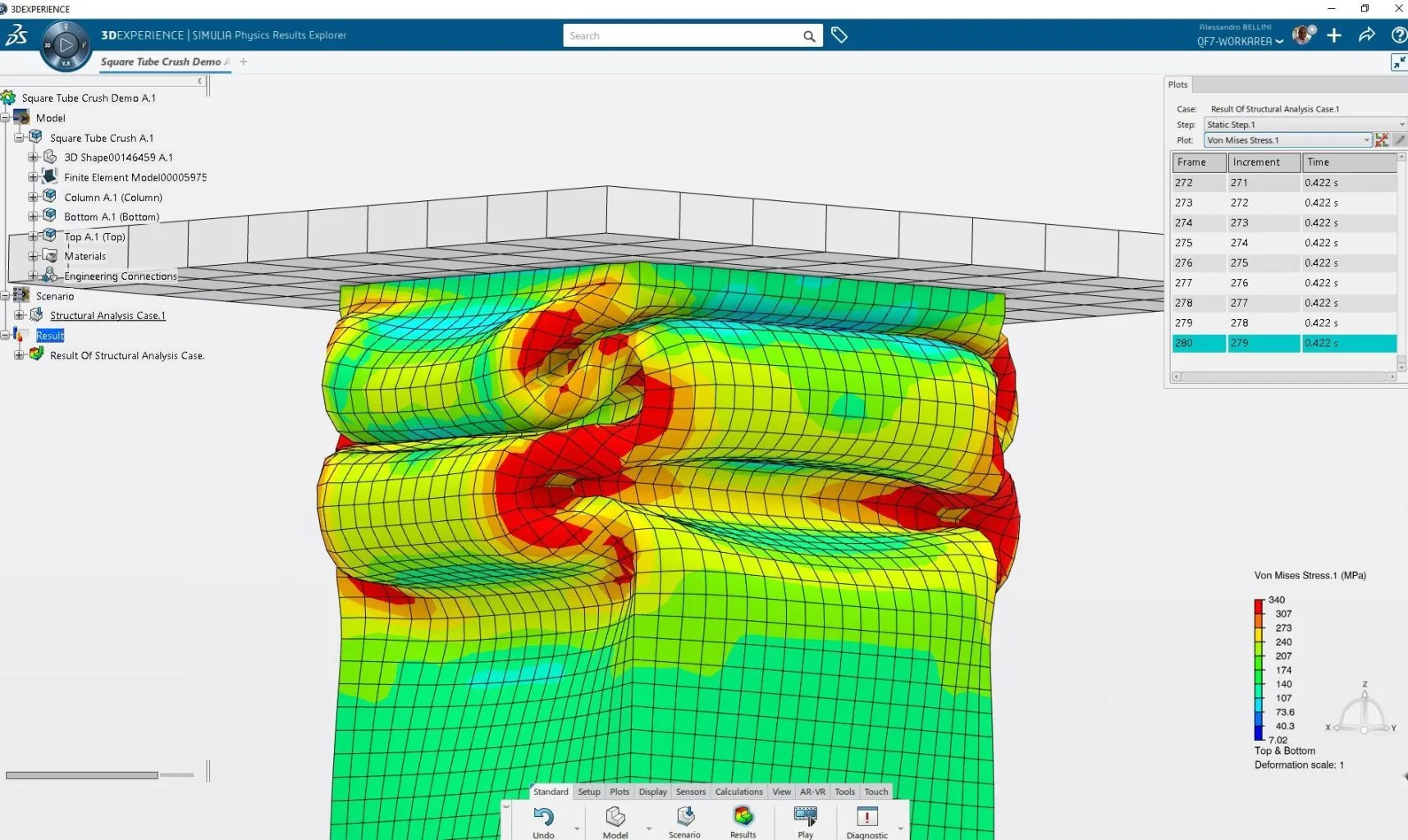
Energineers make use of Abaqus structural analysis because of the high level of accuracy that the software provides. Abaqus, being an advanced finite element, assists in simulating and understanding real-world structural behaviours that are under varied loading conditions. It can now study detailed things like deformation, failure patterns, and stress distrubutions etc which is a great level of precision to study the data.
It assists in managing complex geometries.
Abaqus structural analysis is used by engineers to manage complex geometries and structural systems. Whether it is irregular shapes or any large assemblies, the software can now model and study with simplification and manage engineering problems with proper structure and uniformity.
Provides Advanced Material Behaviour Simulation
One of the major benefits of Abaqus structural analysis is its constant ability to simulate advanced material behaviours. It aims to provide detailed support to modelling materials such as composites, metals, or concretes, so that by using such Abaqus CDP, engineers can now replicate the behaviours.
Read More: Top 5 Abaqus Courses For Concrete Damage Plasticity & Structural Analysis
Abaqus Concrete Damage Plasticity (CDP) Model
The ABAQUS CDP is one of the most advanced material models used in the application of ABAQUS structural analysis. It is used to simulate nonlinear behaviours while combining plasticity and damage mechanisms to represent how concrete behaves under situations of tension and compression, such as cracking, crushing, or stiffness degradation. If you want to learn more about CDP and related simulation concepts, you can check our detailed Ansys CDP Complete Guide blog. The ABAQUS CDP model is predominantly used to effectively capture the real-world concrete behaviour in different conditions, whether static, dynamic, or cyclic loads.
What are the key parameters in Abaqus CDP
Study the compression and tension behaviour
In ABAQUS CDP, the concrete behaviour is defined individually for tension and compression. So in compression, the model can capture crushing and hardening behaviours, whereas in tension, it aims to represent cracking and softening effects.
Damage variables
Damage variables are essential for Abaqus concrete damage plasticity models. Under these variables, there is a study of material stiffness, which happens because of cracking and crushing. The two key parameters are tensile damage and compressive damage. So as the level of damage increases, the stiffness of the material reduces.
Applications of Abaqus CDP
Abaqus CDP is used for studying reinforced concrete beams, which can capture cracking, crushing, and post-peak damage behaviours. This makes ABAQUS structural analysis more useful for a beam response study under the loading and cyclic conditions.
Engineers can now use Abaqus for bridge-related problems, especially when they want to study areas of stress, deformation, and load response issues in complex infrastructural models. Also, predict how concrete structures deteriorate over time and identify likely failure zones.
Conclusion
ABAQUS stands as one of the most powerful software programs to offer the ability to handle nonlinear material behaviours, understand complex geometries, and study varied loading conditions with high precision. If you are looking to study the Abaqus Structural Analysis Course, join PIGSO LEARNING – an advanced skill learning educational platform designed for researchers, students, and learners to acquaint themselves with the subject knowledge and enhance their career, and become job-ready.
Learning to build expertise through structural engineering tutorials and learning Abaqus can significantly enhance your skills and career opportunities in structural engineering.
Frequently Asked Questions
What is ABAQUS CDP?
Abaqus CDP, or Concrete Damage Plasticity, is a model in Abaqus that is primarily used to simulate nonlinear behaviour. Abaqus CDP (Concrete Damage Plasticity) is a material model used to simulate nonlinear concrete behaviour, including cracking and crushing, in Abaqus structural analysis.
Where is Abaqus CDP used?
It is used in the application of reinforced concrete beams, study bridges, and structural failure prediction, mainly for studies to analyse damage, load response, and long-term performance.
Where can I learn about Abaqus structural analysis?
You can learn Abaqus training programs, such as structural analysis, from PIGSO LEARNING, an online education platform designed to simplify complex engineering topics for students and learners who want to expand their knowledge or skills for projects.

Simran Shekhawat is an experienced SEO content writer with three years of hands-on experience in crafting high-impact digital content. With a strong command of search engine optimisation practices, she specialises in creating content that not only reads well but also ranks effectively. Her expertise encompasses keyword research, topic clustering, on-page SEO, content strategy, and crafting copy that aligns with both user intent and brand objectives.
Comments are closed