
What Is Tekla Structures?
Tekla Structures is a powerful 3D Building Information Modelling (BIM) software that is ideally used for the architecture, engineering and construction (AEC) Industry. With its advanced capabilities, Tekla Structures software helps professionals to design, detail and manage structural projects with exceptional accuracy.
Engineers and designers use Tekla Structures models to create highly detailed 3D representations of steel, concrete, timber, and other structural components from simple elements to the most complex infrastructures.

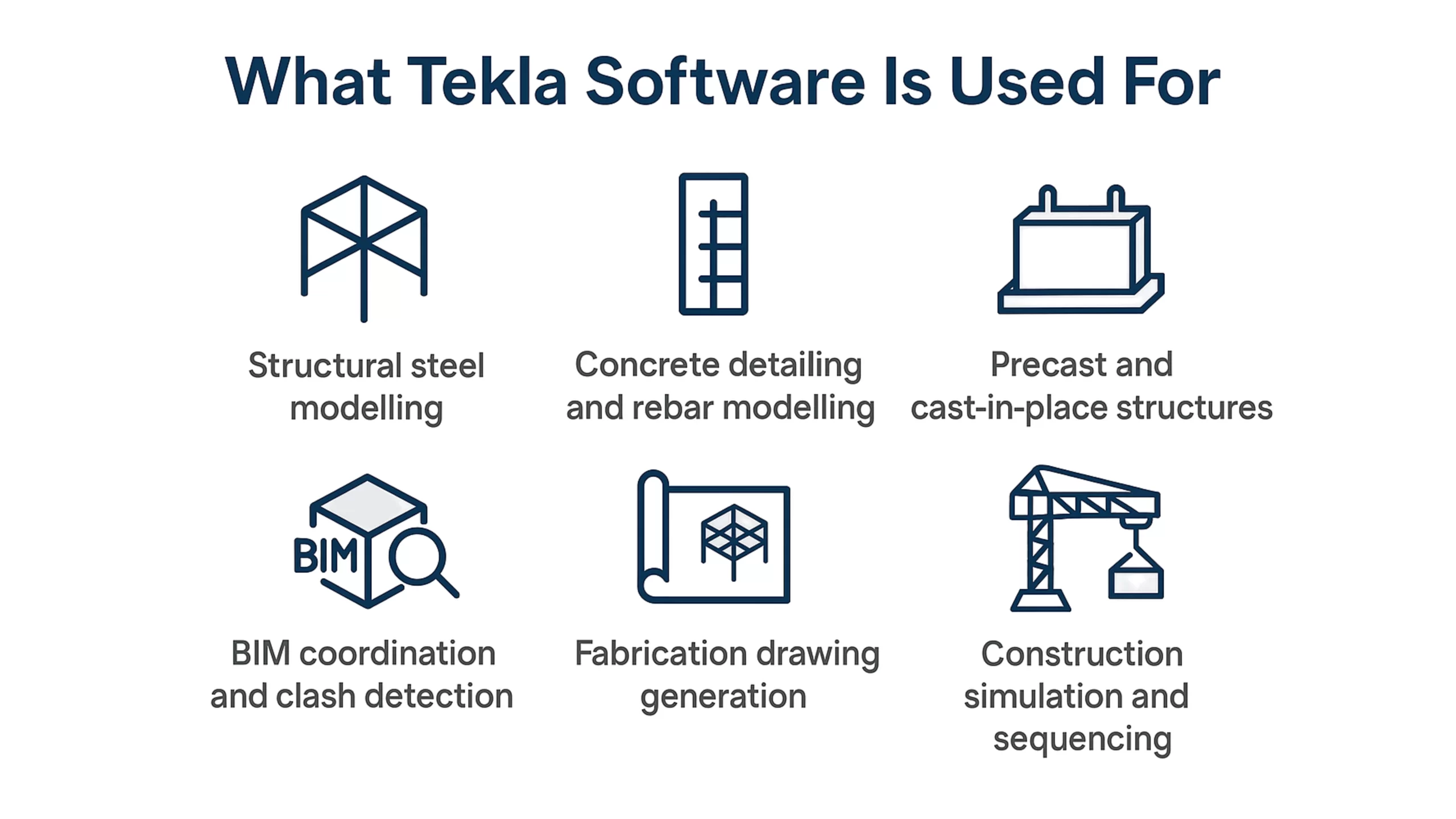
What Tekla Software Is Used For
Tekla Structures software is designed to provide end-to-end support for structural modelling, detailing and construction workflows. This software plays a pivotal role in creating intelligent Tekla structure models.
Structural Steel Modelling
Tekla Structures helps engineers to construct a precise steel model, assemble connections and fittings. These detailed Tekla structure models help ensure a smooth fabrication process.
Concrete Detailing and Rebar Modelling
Tekla structure designs help build complex reinforcement layouts, automated rebar placements and highly detailed concrete components, and with such advanced tools, this improves the overall construction quality while reducing the chances of manual detail errors.
Precast and Cast-in-Place Structures
Tekla software is used for modelling both precast and cast-in-place elements, helping engineers to design panels, beams, slabs, and reinforcement exactly as required for factory production or site casting.
BIM Coordination and Clash Detection
Tekla Structures models play a key role in BIM workflows by allowing teams to detect clashes between steel, concrete, and MEP systems early. This improves coordination and minimises costly rework during construction.
Construction Simulation and Sequencing
Tekla software structures are also used for managing construction planning, allowing teams to manage sequences, take measures, and visualise the entire project timeline to produce results that are safer, organised and error-free.
Key Features of Tekla Structures
Modern construction projects require efficient structural design and detailing, and that is where Tekla Structures software excels. Here are some of the best standout features of Tekla Structures.
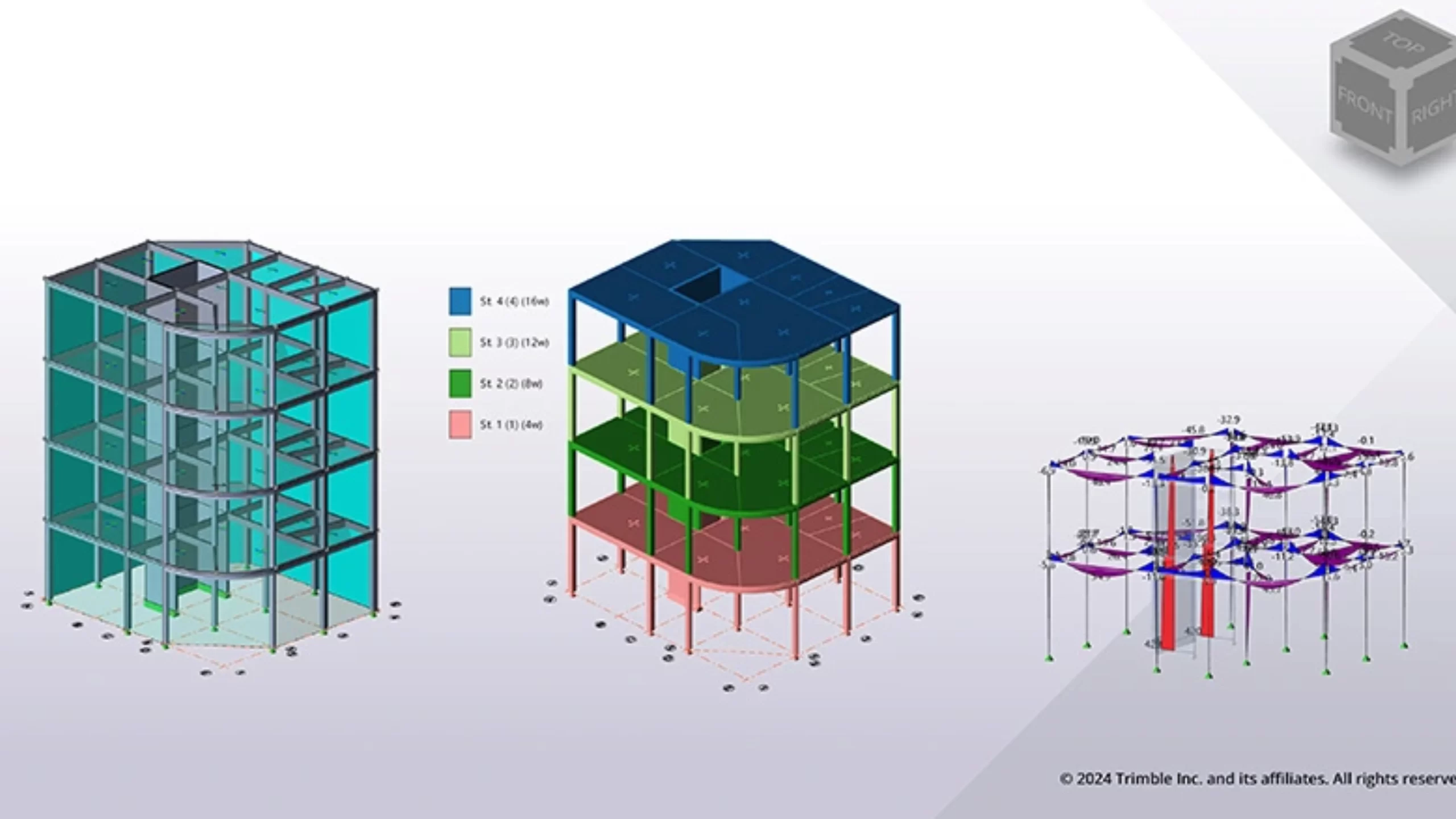
Accurate and Constructible 3D Modelling
One of the key features of Tekla structure software is its ability to draw highly accurate constructible 3D models so that engineers can build detailed Tekla structure models that can reflect real-world materials and connections, which helps reduce errors during the construction process.
Advanced Reinforcement Modelling
For major concrete structures, Tekla Structures helps deliver powerful reinforcement tools that engineers can use to create complex rebar layouts, automate schedules and make sure that every reinforcement detail aligns well with the industry, assisting in making modelling faster, precise and accurate.
Seamless BIM Collaboration
Tekla Software is also used for efficient team coordination and open BIM workflows. This allows smooth sharing of models with engineers, architects, and contractors, improving communication and reducing the cost of misunderstandings.
Automated Drawings & Reports
Another key feature of Tekla software structures is the automation of fabrication drawings, GA drawings, and a list of material reports, as all the documents are generated directly from the Tekla structure models; any change in the model updates the drawings instantly, which further assists in saving time and delivering results with accuracy.
Tekla Structures Analysis & Design Integration
Tekla software structures assist in integrating multiple structural analysis tools that help engineers move back and forth without any discrepancy. This process of seamless integration supports a complete workflow from modelling to analysis and finally to Tekla structural designs, helping ensure faster decision-making.
Importance of Tekla Structures in Civil Engineering & Construction
Tekla’s software structure is considered to be important in today’s fast-paced construction industry for several reasons
Precision in Structural Detailing
Learning to understand what Tekla Structures is starts from understanding its ability to deliver unmatched accuracy in projects. Engineers, contractors, and architects use Tekla structures to showcase every bolt, weld, and reinforcement detail as accurately as how it has to be built. This level of precision technique reduces the chances of errors and ensures the final structure meets real-world construction standards.
Improved Project Coordination
Tekla Software structures are being used to build a smooth, seamless project coordination. Now teams can work together more efficiently, review updates in real time, and resolve conflicts before they reach the site, resulting in smoother project workflows.
Faster Project Delivery
Tekla software structures help in automated modelling, detailing, and documentation processes help speed up the construction timelines and instantly bring out the changes that are made in the designs. This significantly reduces manual rework, accelerates the construction process and boosts overall project delivery.
Read More: Finite Element Analysis: The Unseen Pillar of Structural Analysis
Tekla Software Training – How to Learn Tekla Structures

In today’s fast-paced construction industry, understanding what Tekla structures is and how it helps improve project workflow has become necessary for engineers, architects and BIM professionals.
PIGSO LEARNING helps provide structured and beginner-friendly Tekla Structure software courses. With expert mentors and practical sessions, PIGSO Learning ensures learners can build the confidence needed to work with this advanced Tekla Structures BIM software in real engineering scenarios.
Best Way to Start Tekla Training Online
Join PIGSO LEARNING’s Tekla Structure Training Course Online program to learn about Key features, importance, benefits and real-world applications of Tekla structures. We have designed the course to help learners understand what Tekla software is used for, starting from the fundamentals and progressing to expert-level modelling.
Through guided sessions, PIGSO LEARNING helps students learn about
- Create accurate Tekla Structures.
- Perform Tekla Structures analysis and integrate structural data
- Execute Tekla Structures design workflows used in real construction projects
- Automate drawings, reports, and BIM coordination
- How to use Tekla Structures for fabrication planning and construction sequencing
With project-based learning, assignments, and real-time mentoring, PIGSO LEARNING helps students not just learn the software but understand how to apply it in engineering, BIM coordination, and construction management.
Benefits of Tekla Structures for Engineers
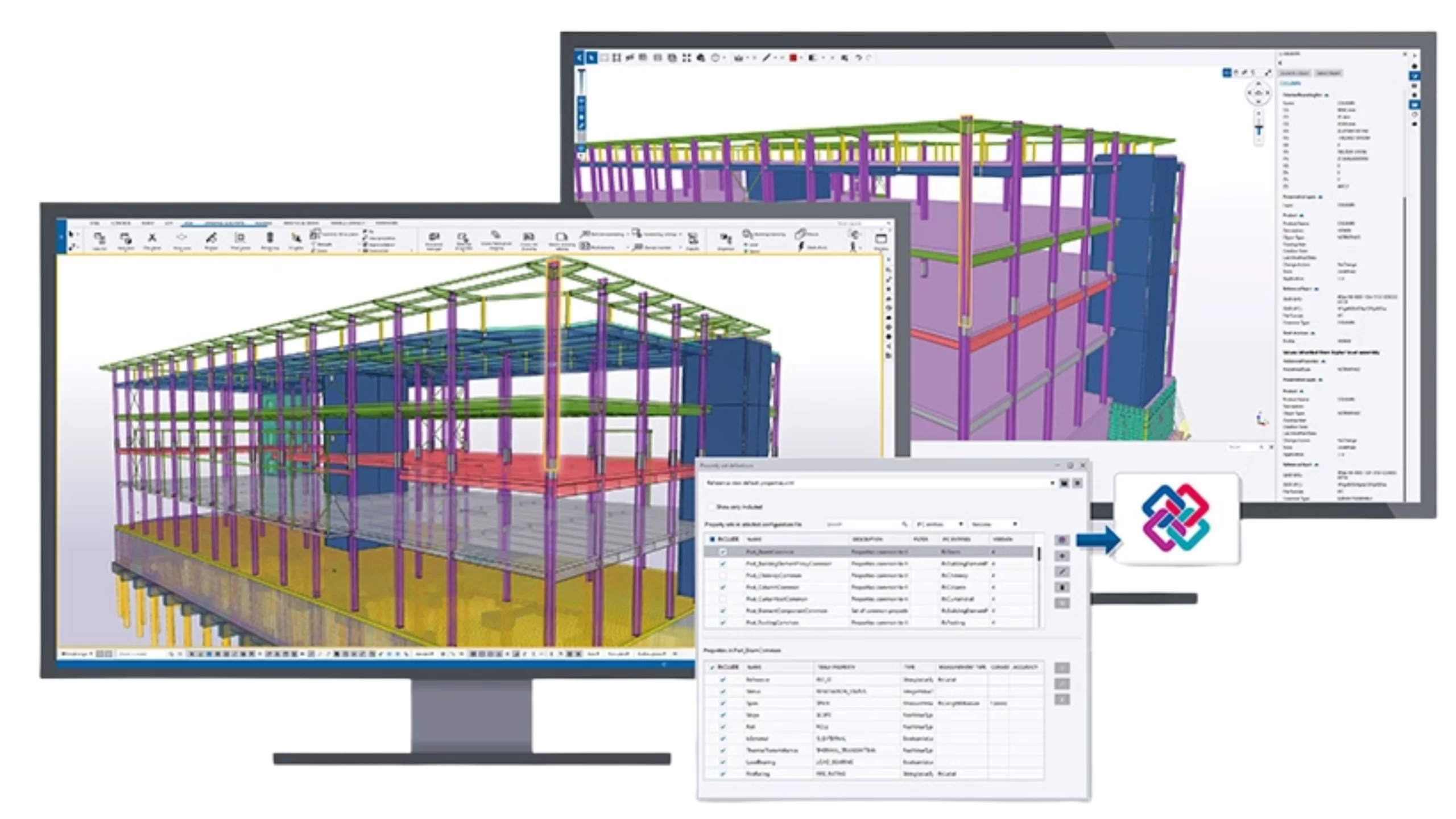
1. Highly Accurate 3D Modelling
Tekla software structures are highly accurate; they help engineers to create precise Tekla structure models for steel, concrete and precast elements. These models reduce the chances of errors, improve clarity and provide a realistic representation of structure.
2. Advanced and Efficient Structural Design
Tekla Structures design benefits engineers to construct detailed connections, reinforcement plans, and assemble data with high accuracy.
3. Seamless Workflow Integration
Tekla Software is also used for integrating smooth coordination with BIM platforms, CAD tools and analysis programs to ensure that every stakeholder, architect and everyone is on the same page of construction and collaboration
4. Improved Project Accuracy Through Analysis
Tekla Structures analysis assists engineers to validate and understand structural behaviour, check loads, and detect clashes early. This increases reliability and ensures the final output meets engineering standards.
5. Faster Learning and Skill Development
For beginners wondering how to use Tekla Structures, structured Tekla software training helps them understand modelling, detailing, and BIM workflows. Learning the software enhances an engineer’s technical skills and increases their job opportunities.
Conclusion
Tekla software is transforming structural engineering by making modelling, detailing, and project coordination more efficient, faster and data-driven. From concept to construction, engineers depend on Tekla to improve accuracy, reduce errors, and optimise workflows. With the right Tekla software training, professionals can fully leverage these capabilities.
For learners ready to begin their journey, PIGSO Learning offers structured Tekla training online and a complete Tekla training course designed to help students master industry workflows and build strong career-ready skills in Tekla Structures.
Contact us today to get started!
FAQs
Q1. How do engineers benefit from Tekla Structures BIM software?
Tekla Structures helps Engineers in providing improved accuracy, automated detailing, faster documentation, and better project coordination using intelligent 3D models.
Q2. How can beginners learn how to use Tekla Structures effectively?
Beginners like engineers, architects, and constructors can manage to learn about Tekla Structures through a structured Tekla software training program designed by PIGSO Learning. We at PIGSO Learning help learners to get acquainted with the concepts of Tekla structures and software via our online training programs.
Q3. Why is Tekla Structures design preferred for steel and concrete projects?
Tekla Structures design is used to deliver improved and accurate detailing, constructible assemblies, automated drawings, and real-time model updates for steel and concrete structures.
Q4. What is included in a Tekla training course for engineers?
In our Tekla structure software training program at PIGSO Learning, we introduce learners to the concepts related to the subjects we also cover real-world case studies and hands-on project exercises.

Simran Shekhawat is an experienced SEO content writer with three years of hands-on experience in crafting high-impact digital content. With a strong command of search engine optimisation practices, she specialises in creating content that not only reads well but also ranks effectively. Her expertise encompasses keyword research, topic clustering, on-page SEO, content strategy, and crafting copy that aligns with both user intent and brand objectives.